
Field service management software
Field service management software built around how you already work.
Scheduling, dispatch, a technician app, quotes, invoices and customer updates, set up to your own stages, forms and checklists. AI agents assist your team. Live within a day, one price per company with unlimited users.
What it does
Everything between the request and the payment.
Field service management (FSM) software runs the work that happens at your customers' sites. Fieldproxy covers all of it, and every piece is set up to how you run it.
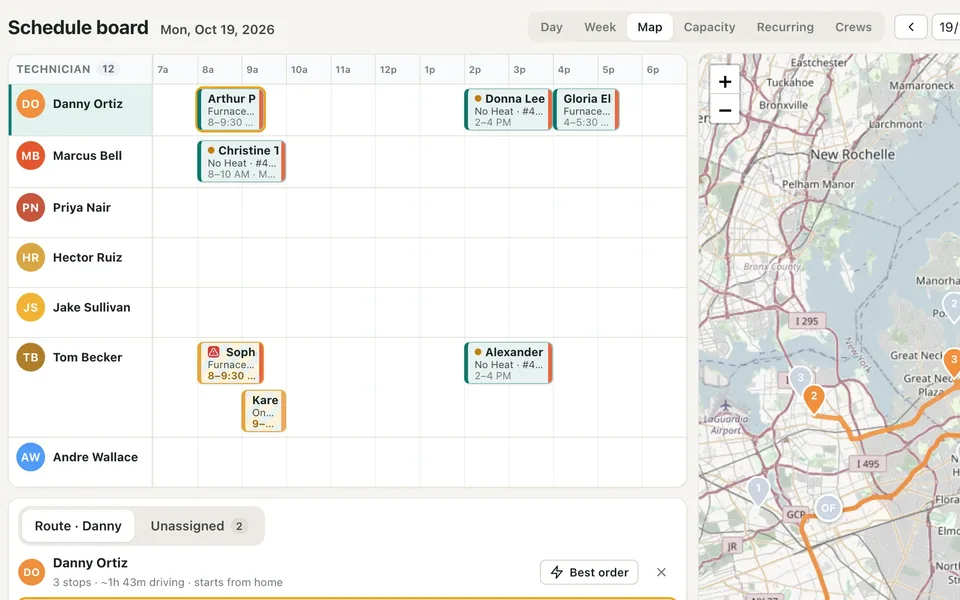
Scheduling and dispatch
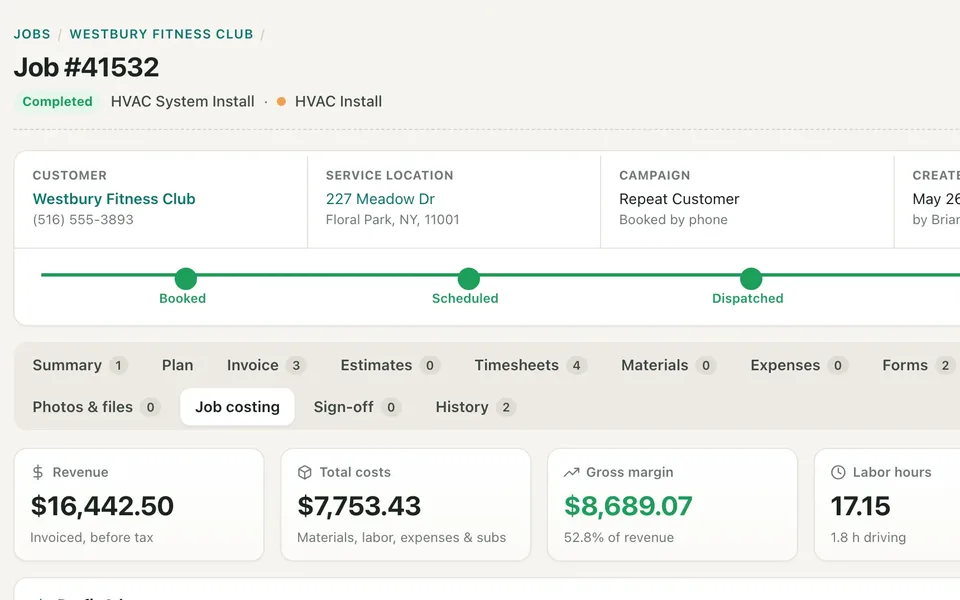
Jobs and work orders
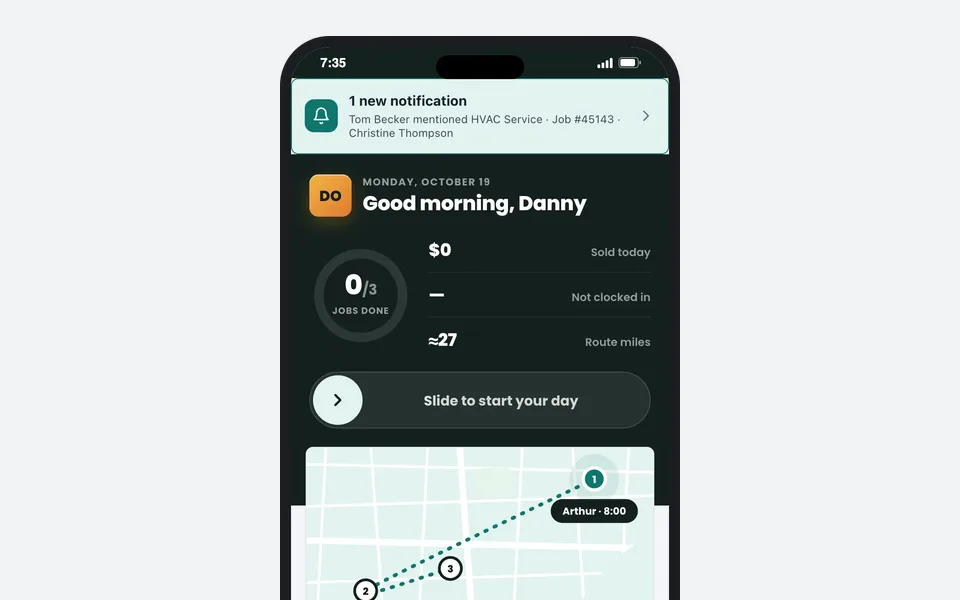
Technician mobile app
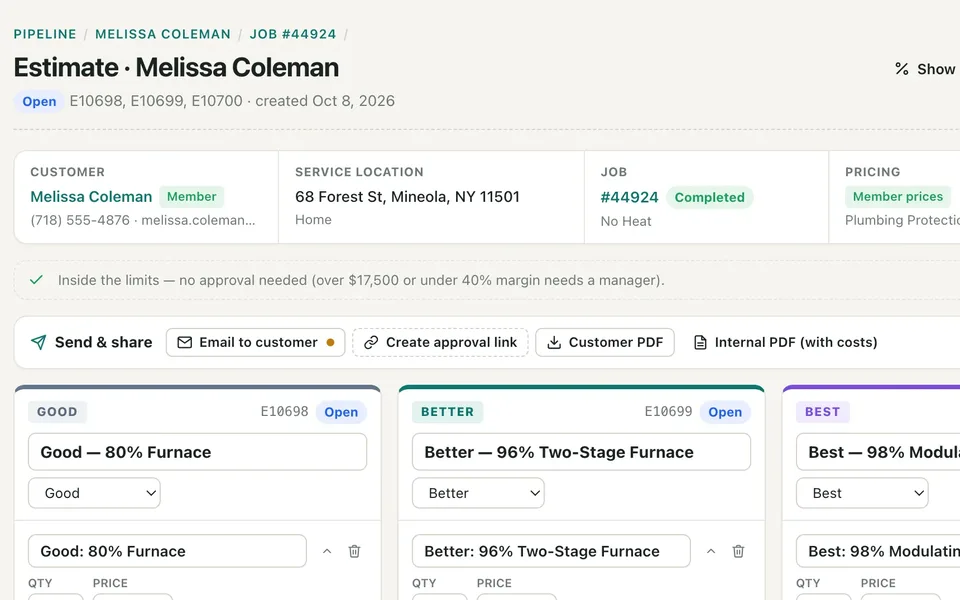
Quotes and estimates
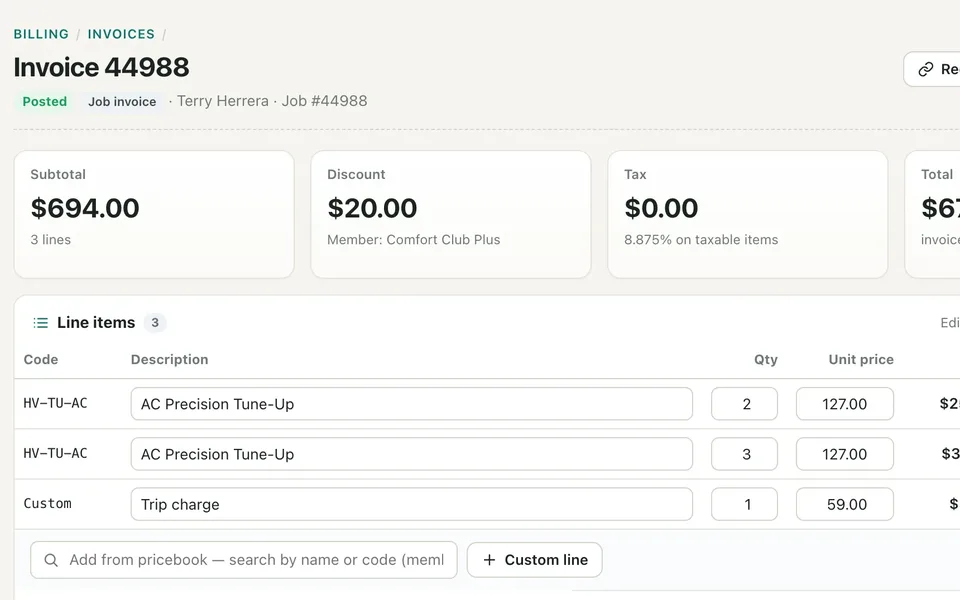
Invoices and payments
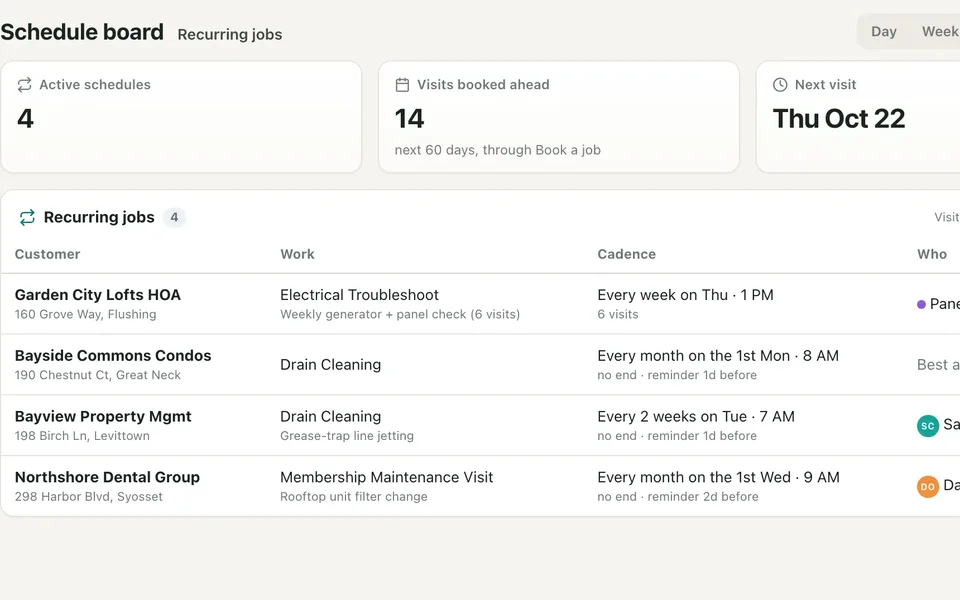
Recurring maintenance
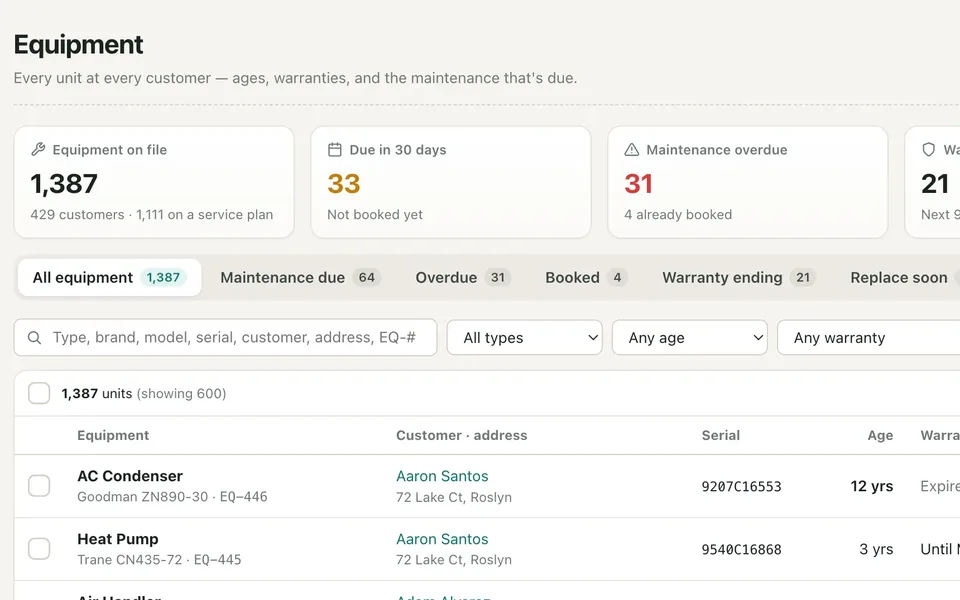
Assets and equipment
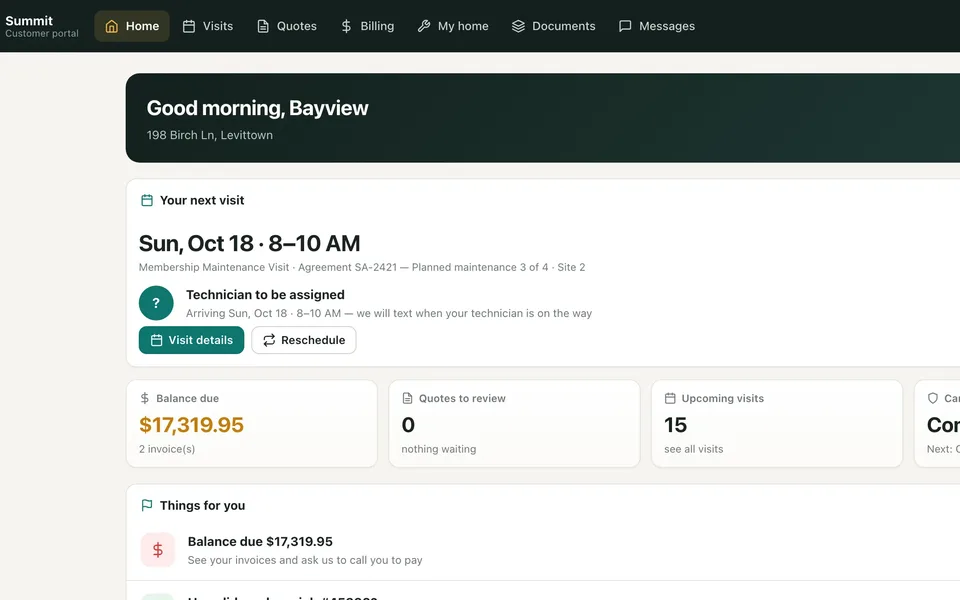
Customer portal and updates
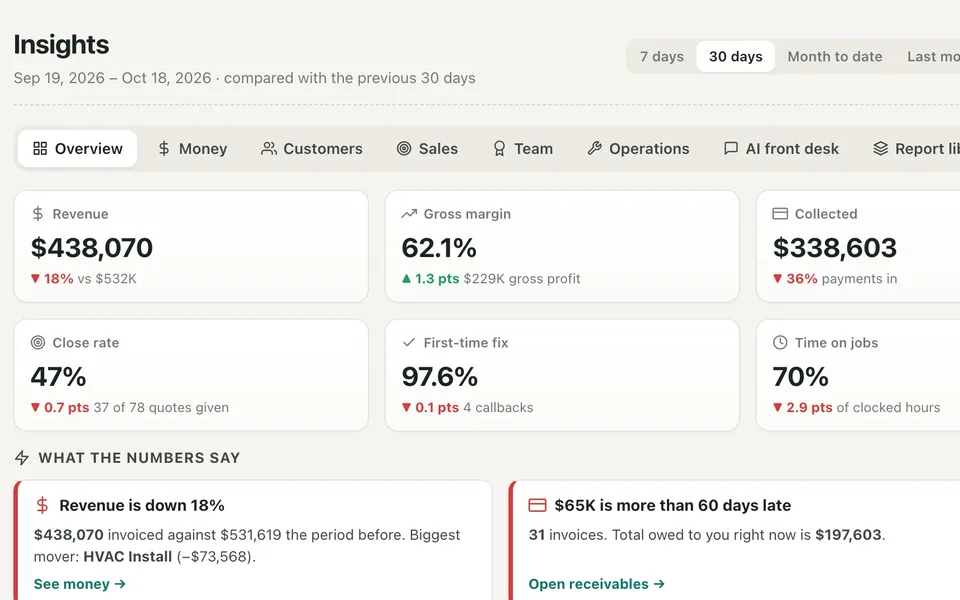
Reports and dashboards
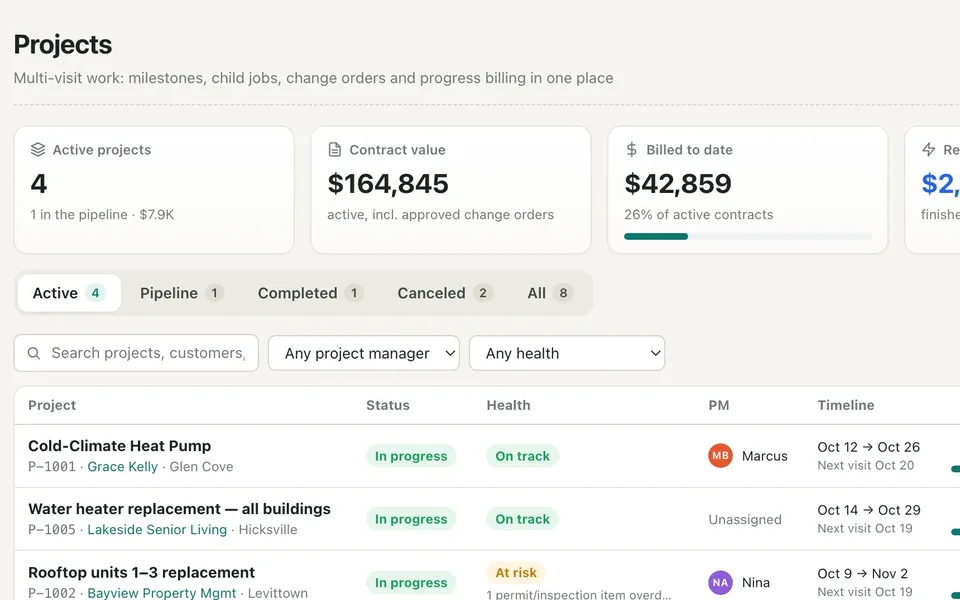
Projects
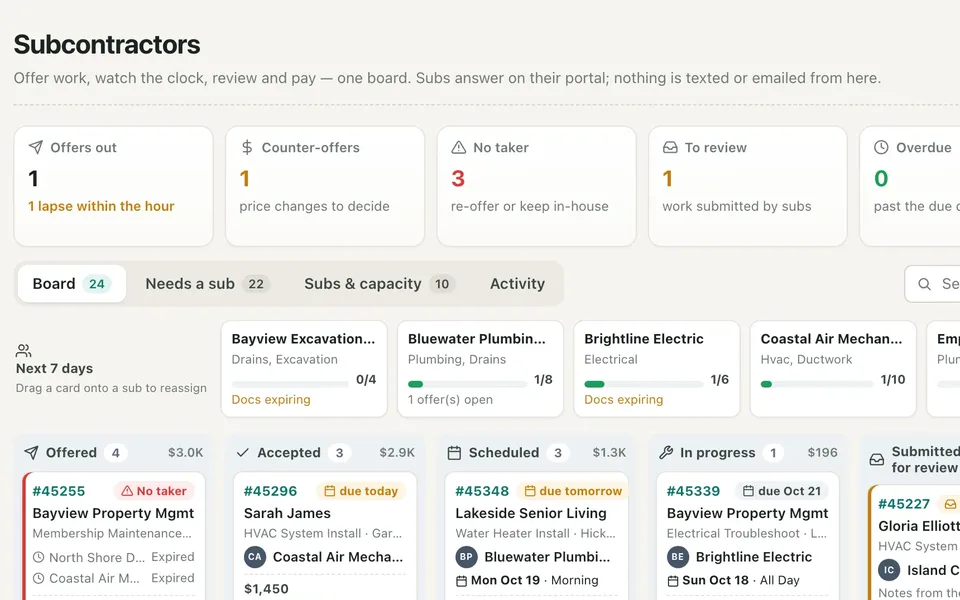
Subcontractors
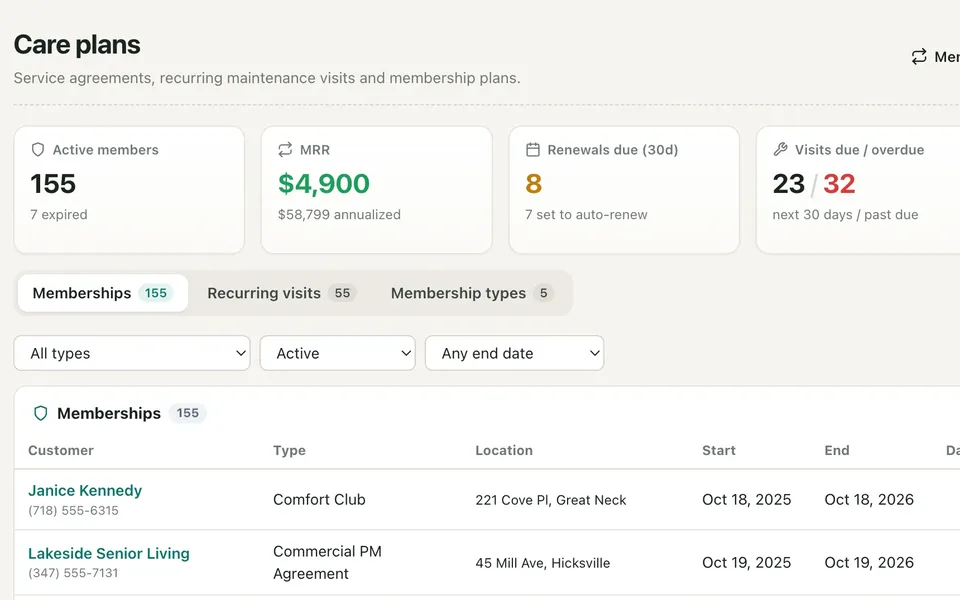
Agreements and memberships
Why it fits
Most FSM software asks you to change. We change the software.
Template software
- Your process bends to fit the tool
- Changes are tickets, add-ons or a services project
- Priced per technician, so every hire costs more
- Months to roll out
Fieldproxy
- Set up to your own stages, forms and checklists
- Change it later by asking in plain English
- One price per company, unlimited users
- Live within a day
See it built around how your team already works.
Get DemoAI field service management
AI agents that assist your team, inside your workflow.
Fieldproxy is AI-native: the agents work on your real jobs, customers and schedule, and you confirm anything that matters before it happens.
Answers and books
Builds the schedule
Dispatches the right tech
Keeps customers told
Chases the paperwork
Drafts invoices, chases payment
Command Center
Autopilot
Approvals for big changes
By trade
Field service software for your trade.
The same platform, set up to the way each trade actually works.
Specialist work:
See it set up for your trade, on your own jobs.
Get DemoSwitching
Live within a day, not months.
Moving from another tool or from spreadsheets. Fieldproxy AI moves it all over from any major tool or custom system in less than a day.
A 30-minute call
We map how you run: your job stages, forms, crews, pricing and how work turns into an invoice.Live within a day
We set Fieldproxy up to that process and show it to you running, with the AI agents working on it.We move you over
Customers, sites, assets and jobs migrated. You switch when your team is ready.
Buyer's guide
How to choose field service management software.
Six questions that separate software that fits from software you'll work around.
- 1
It fits your process without a services project
If every change is a ticket, an add-on or a consultant, the software will run you. Ask to see your own workflow set up, not a demo account.
- 2
The price as you grow
Per-technician pricing gets expensive as you hire. Per-company pricing with unlimited users does not.
- 3
A mobile app your crews will actually use
Offline mode, photos, checklists and signatures, on the phones they already carry.
- 4
Time to go live
Weeks of setup and a six-month rollout cost you a season. Ask for a date.
- 5
AI that does work, not just summaries
The useful AI books jobs, rebuilds the schedule and drafts the invoices. A chatbot that summarises a ticket is not the same thing.
- 6
Your data, connected
Accounting (QuickBooks, Xero), payments (Stripe), your CRM or helpdesk, and a way to get everything out.
Customer stories
Most of our customers tried something else first.

“A team that keeps improving the product with us. It's grown alongside our operation.”
Lea Paredes, Senior Data Analyst, ActionLabs
IT services
Questions
Field service management software, answered.
What is field service management software?
Field service management (FSM) software runs the work that happens at customers' sites: taking requests, scheduling and dispatching technicians, the mobile app they use on the job, quotes, invoices and payments, recurring maintenance, and the customer updates in between. Fieldproxy is AI-native field service management software set up to how your business already works, with Fieldproxy AI agents that assist your team.
How much does field service management software cost?
FSM pricing is usually per technician per month, tiered by number of users, or one price per company. Per-user plans look cheap for a small team and rise with every hire. Fieldproxy is one price per company with unlimited users, and AI credits are charged separately.
What is the best field service management software for a small business?
The best FSM software for a small business is the one that fits how you already work and keeps a sensible price as you hire. If a template tool matches your process, it may be enough. If your stages, forms or pricing don't fit a template, Fieldproxy sets the software up to your process, with unlimited users, one price per company.
What is AI field service management?
AI field service management means AI agents assisting your team inside your field service software: answering calls and texts, booking jobs, building and rebuilding the schedule, dispatching the right technician, keeping customers updated and drafting invoices. In Fieldproxy you confirm anything that matters before it happens.
How long does it take to set up field service software?
With Fieldproxy, we map how you run on a 30-minute call and have it configured and live within a day. We then migrate your customers, sites and jobs and switch you over when your team is ready. Fieldproxy AI moves it all over from any major tool or custom system in less than a day.
Can field service software be customized to my process?
Most FSM tools let you change settings inside a fixed template. Fieldproxy is built the other way round: your job stages, forms, checklists, statuses and pricing rules are set up to your process, and you change them later by asking in plain English.
Is there a mobile app for technicians?
Yes. Fieldproxy's technician app runs on Android and iOS and works offline, with checklists, photos, signatures and GPS check-in, all set up to your own forms.
Is Fieldproxy cloud based?
Yes. Fieldproxy is cloud based field service management software. The office runs it in a web browser, and technicians use the Fieldproxy field service management app on Android and iOS, which keeps working offline and syncs when they are back in signal.
Does it work with QuickBooks, Xero and ChatGPT?
Yes. Fieldproxy connects to QuickBooks, Xero and Stripe, among others, and its MCP server lets you run your field service workspace from ChatGPT, Claude or Microsoft Copilot, with every change confirmed first.
See your field service software built around you.
Get your own custom field service management within a day. Tailored to your workflows. A 30-minute call on how you run, then we show you the AI agents running it.