Back to Blog
case-study

How a Locksmith Business Doubled Revenue Using AI-Powered Scheduling

Fieldproxy Team - Product Team
locksmith business success storylocksmith service managementlocksmith softwareAI field service software

When SecureKey Locksmiths started in 2020, owner Marcus Chen faced the same challenges as most locksmith businesses: unpredictable emergency calls, scheduling conflicts, and technicians arriving late to appointments. Despite having skilled locksmiths and competitive pricing, the business struggled to grow beyond five technicians. By implementing AI-powered field service management software, SecureKey transformed their operations and doubled revenue within 18 months. This case study reveals the exact strategies and tools that made their success possible.

The Challenge: Chaos in Locksmith Operations

SecureKey Locksmiths operated like many traditional locksmith businesses, relying on phone calls, text messages, and handwritten schedules. Marcus spent hours each day manually coordinating emergency lockouts, key duplication appointments, and commercial lock installations. The lack of visibility into technician locations meant customers often waited longer than promised, leading to negative reviews and lost repeat business.

The company's biggest pain point was emergency call management. When a customer called with a lockout emergency, the dispatcher had no real-time visibility into which technician was closest or available. This resulted in longer response times, frustrated customers, and missed revenue opportunities. Similar to challenges faced by other service businesses, as shown in our electrical contractor case study, paper-based processes were holding the business back.

  • Average emergency response time of 75 minutes due to poor dispatch coordination
  • 20% of appointments resulted in customer complaints about late arrivals
  • Technicians completed only 4-5 jobs per day due to inefficient routing
  • Manual scheduling consumed 15+ hours of management time weekly
  • No data insights into profitable service types or customer patterns
  • Invoice delays averaging 5-7 days affecting cash flow

Revenue stagnated at approximately $450,000 annually despite strong demand for locksmith services in their metro area. Marcus knew the business had potential but couldn't scale without solving the operational inefficiencies. The breaking point came when they lost a major commercial contract because they couldn't guarantee response times or provide digital service documentation.

The Solution: AI-Powered Scheduling and Field Service Management

After researching various field service management solutions, Marcus chose Fieldproxy for its AI-powered scheduling capabilities and 24-hour deployment promise. Unlike traditional FSM software that required weeks of setup, Fieldproxy was operational within a single day. The unlimited user model meant SecureKey could onboard all technicians without worrying about per-seat costs, making it perfect for their growth plans.

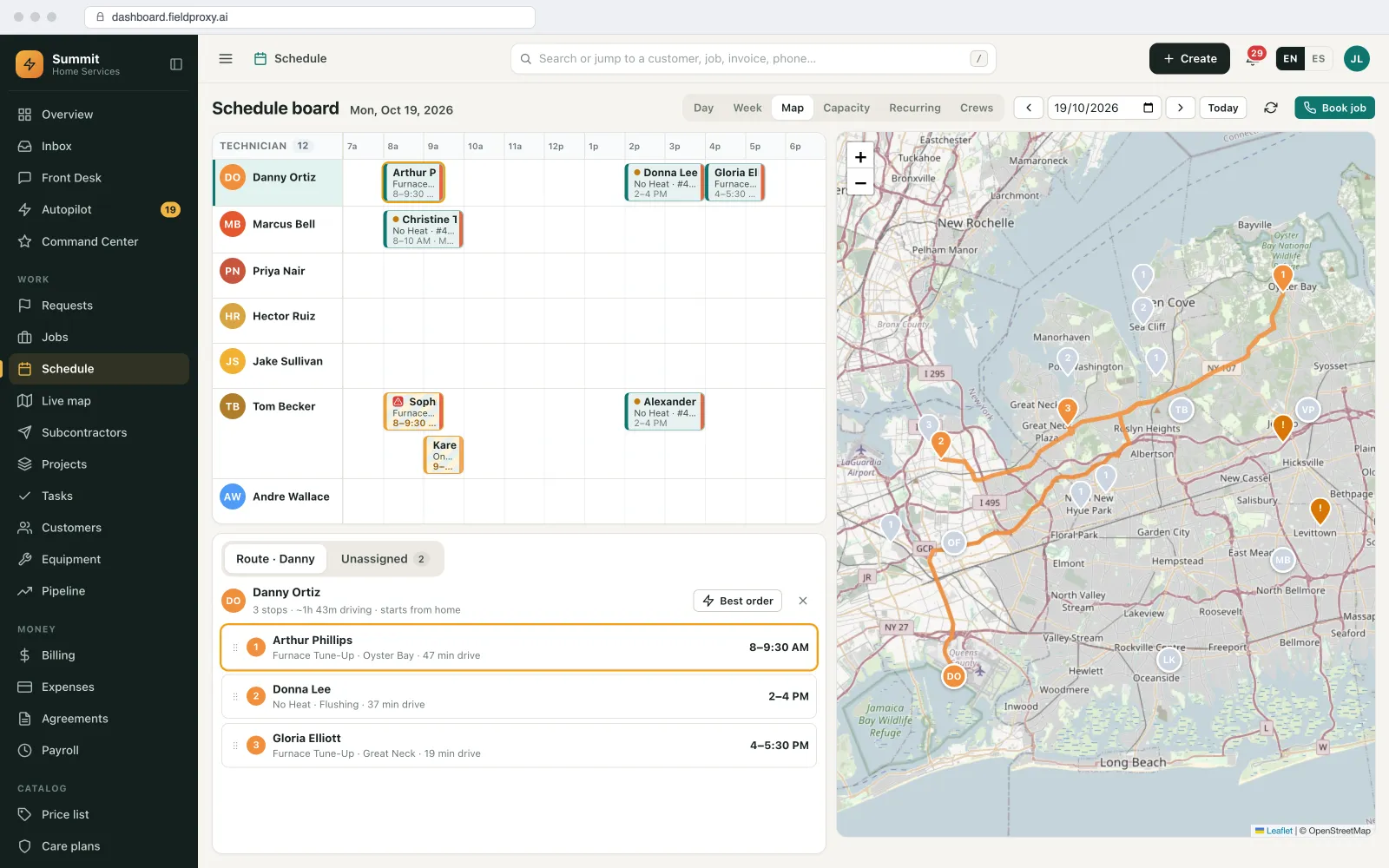
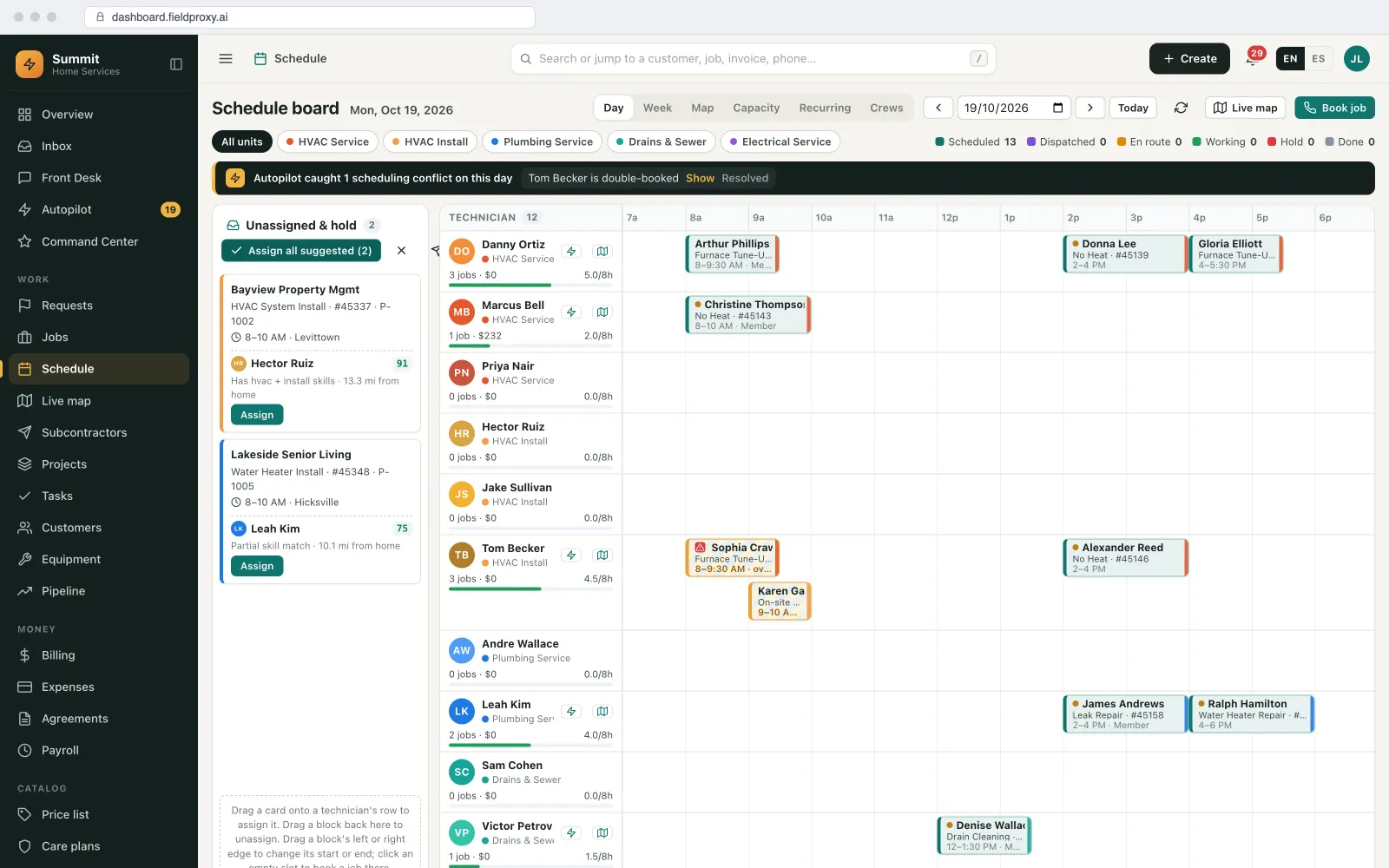
The AI scheduling engine became SecureKey's competitive advantage. When emergency calls came in, the system automatically identified the nearest available technician, calculated optimal routes considering traffic patterns, and dispatched the job with one click. This reduced average emergency response time from 75 minutes to just 28 minutes, a dramatic improvement that customers immediately noticed and praised in reviews.

Fieldproxy's custom workflow capabilities allowed SecureKey to create specific job types for different locksmith services: emergency lockouts, rekeying, lock installations, master key systems, and commercial security consultations. Each workflow included customized checklists, required photos, and automatic parts inventory tracking. This standardization improved service quality consistency across all five technicians and made training new hires significantly easier.

Implementation: A Smooth 24-Hour Transition

SecureKey's implementation experience contrasted sharply with horror stories Marcus had heard from other business owners. The Fieldproxy onboarding team completed setup in under 24 hours, importing existing customer data, creating service territories, and configuring mobile apps for all technicians. The team received training via video call, and by day two, they were running jobs through the new system.

The mobile app adoption was surprisingly smooth. Technicians appreciated the GPS navigation that automatically routed them to jobs, the digital forms that eliminated paperwork, and the ability to accept payments on-site. Within the first week, customer satisfaction scores improved as technicians arrived on time and provided professional digital invoices immediately after completing work, similar to results seen in our HVAC company success story.

  • Day 1: System configured and all technicians onboarded
  • Week 1: Emergency response time reduced by 35%
  • Month 1: Technician productivity increased from 4-5 to 6-7 jobs daily
  • Month 3: Customer satisfaction score improved from 3.8 to 4.7 stars
  • Month 6: Revenue increased 28% with same number of technicians
  • Month 12: Expanded to 8 technicians handling 40% more jobs
  • Month 18: Revenue doubled to $900,000 annually

Key Features That Drove Revenue Growth

The AI-powered intelligent dispatching became SecureKey's secret weapon for handling emergency calls. The system considered multiple factors: technician location, current job status, skill specialization, parts inventory in their vehicle, and even historical performance data. This optimization meant the right technician arrived quickly with the correct tools and parts, reducing return visits by 67% and dramatically improving first-time fix rates.

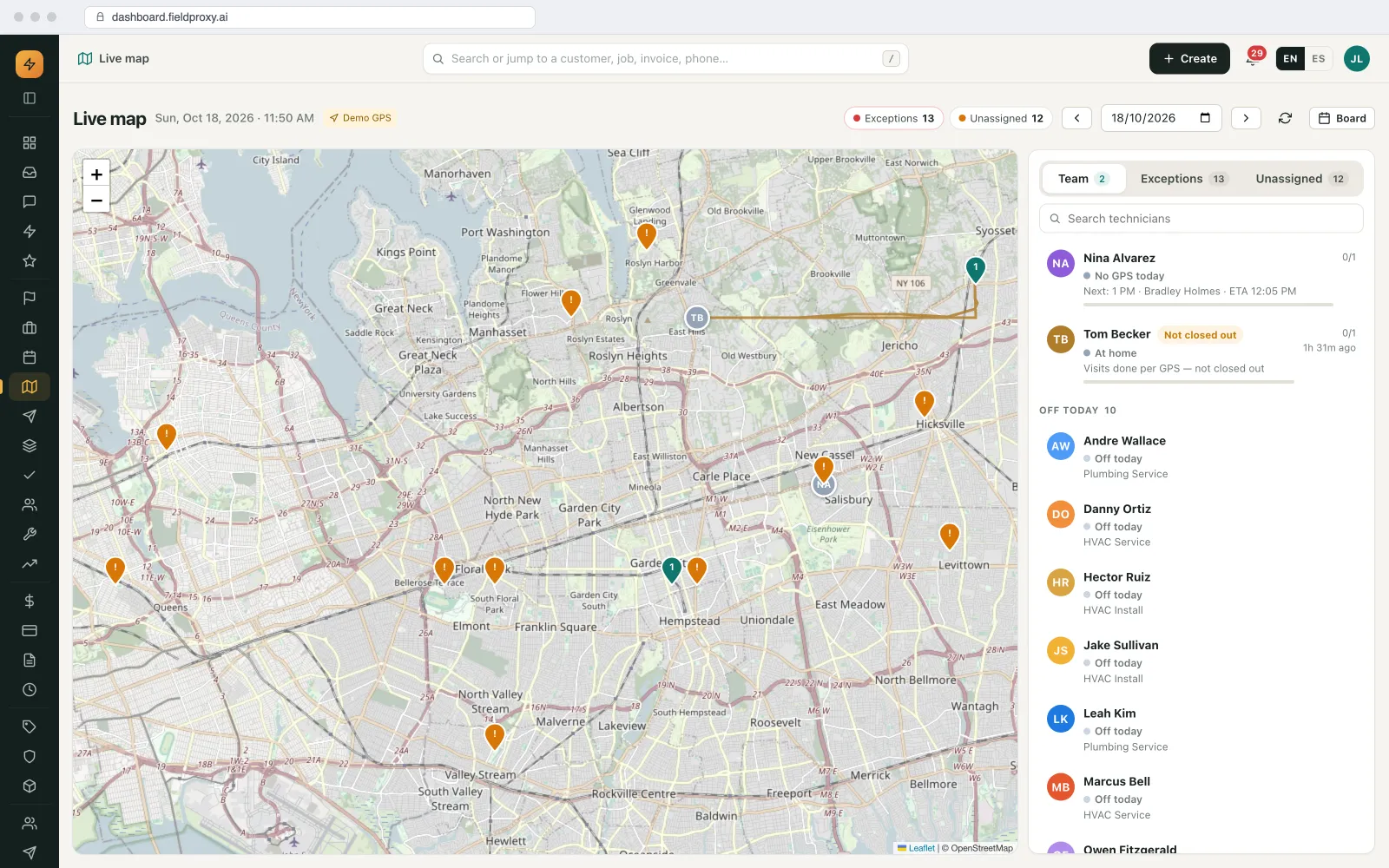
Real-time GPS tracking transformed customer communication. Instead of vague "we'll be there in 30-60 minutes" promises, dispatchers could provide exact ETAs that updated automatically. Customers received text notifications when their technician was 15 minutes away, reducing anxiety and no-shows. This transparency built trust and generated numerous five-star reviews mentioning the professional communication.

The custom workflow builder allowed SecureKey to standardize their service delivery while maintaining flexibility. For commercial lock installations, the workflow required photos of existing hardware, measurements, customer sign-off on proposed solutions, and follow-up scheduling for installation. This structure prevented missed steps and ensured every commercial client received the same high-quality experience, helping SecureKey win larger contracts.

Automated invoicing eliminated the 5-7 day payment delay that had plagued SecureKey's cash flow. Technicians generated invoices on-site through the mobile app, customers signed digitally, and payment processing happened immediately. This improvement in cash flow allowed Marcus to invest in additional inventory and marketing, accelerating growth. The efficiency gains mirror those achieved by contractors in our crew productivity improvement guide.

Data-Driven Decisions That Maximized Profitability

For the first time, Marcus had comprehensive data about his business operations. Fieldproxy's analytics dashboard revealed that commercial rekeying jobs generated 3x higher profit margins than residential lockouts, despite taking similar time. Armed with this insight, SecureKey shifted marketing focus toward commercial clients and adjusted pricing strategies, immediately improving overall profitability by 22%.

The system tracked individual technician performance metrics including jobs completed, average service time, customer ratings, and revenue generated. This data helped identify top performers for bonuses and revealed training opportunities for others. One technician consistently completed jobs 20% faster than average, so Marcus had him train others on his efficient techniques, raising overall team productivity.

Customer analytics revealed seasonal patterns and service trends that informed inventory management and staffing decisions. SecureKey learned that apartment complex rekeying requests spiked in May and August during move-in seasons, allowing them to stock appropriate inventory and schedule additional technicians during peak periods. This proactive approach eliminated rush orders and maximized revenue during high-demand months.

  • Emergency response time decreased from 75 to 28 minutes (63% improvement)
  • Daily jobs per technician increased from 4-5 to 6-7 (40% productivity gain)
  • First-time fix rate improved from 78% to 95%
  • Customer satisfaction score rose from 3.8 to 4.7 stars
  • Invoice payment time reduced from 5-7 days to same-day
  • Management time on scheduling reduced from 15 hours to 2 hours weekly

Scaling from 5 to 12 Technicians Without Chaos

The efficiency gains from Fieldproxy created capacity for growth without hiring additional office staff. Within 18 months, SecureKey expanded from 5 to 12 technicians while Marcus remained the only dispatcher. The AI scheduling system handled the increased complexity effortlessly, optimizing routes and assignments for the larger team just as effectively as it had for the smaller crew.

New technician onboarding became remarkably efficient with standardized digital workflows. Instead of shadowing experienced locksmiths for weeks, new hires could follow the step-by-step checklists in the mobile app, upload required photos, and receive real-time guidance. This reduced training time from 6 weeks to 3 weeks while maintaining service quality standards across the growing team.

The unlimited user pricing model proved crucial during expansion. Unlike competitors paying $50-80 per user monthly, SecureKey's fixed Fieldproxy subscription meant each new technician added pure profit potential without increasing software costs. This pricing structure made growth decisions purely about market demand and technician availability, not software budget constraints.

Customer Experience Transformation

SecureKey's customer experience evolved from frustrating to exceptional. Customers now book appointments through an online portal, receive automatic confirmation texts, get real-time technician tracking, and obtain digital invoices instantly. This modern, professional experience differentiated SecureKey from traditional locksmiths still relying on phone-only booking and paper receipts.

The automated follow-up system transformed customer retention. After each job, Fieldproxy automatically sent satisfaction surveys and requested reviews. Positive feedback was directed to Google and Yelp, while negative responses triggered immediate manager notification for service recovery. SecureKey's online rating climbed from 3.8 to 4.7 stars, with review volume tripling as satisfied customers readily shared their experiences.

Commercial clients particularly valued the digital service documentation. Property managers received comprehensive reports including before-and-after photos, detailed work descriptions, parts used, and warranty information. This professional documentation helped SecureKey win contracts with three major property management companies, adding $180,000 in annual recurring revenue from scheduled maintenance agreements.

The Financial Impact: Doubling Revenue in 18 Months

SecureKey's revenue growth exceeded Marcus's initial expectations. Year one revenue increased from $450,000 to $650,000 (44% growth) with the original five technicians simply working more efficiently. Year two saw expansion to 12 technicians and revenue reaching $900,000, exactly doubling the pre-Fieldproxy baseline. More importantly, profit margins improved from 12% to 19% due to operational efficiencies and higher-value commercial work.

The return on investment was immediate and substantial. Fieldproxy's subscription cost approximately $3,600 annually, while the efficiency gains generated over $200,000 in additional revenue during year one alone. The time savings in dispatch and administration freed Marcus to focus on business development, directly contributing to the commercial contract wins that accelerated growth.

Lessons Learned and Advice for Other Locksmith Businesses

Marcus emphasizes that technology adoption was easier than anticipated. His biggest regret is not implementing field service management software sooner, estimating he lost 2-3 years of potential growth working with manual processes. For locksmith business owners considering similar changes, he recommends starting immediately rather than waiting for the "perfect time" that never arrives.

The key success factor was full team buy-in from day one. Marcus involved technicians in the software selection process, addressed their concerns about technology, and emphasized how the system would make their jobs easier rather than monitor them. This collaborative approach prevented resistance and ensured enthusiastic adoption that drove the impressive results.

Looking forward, SecureKey plans to expand to 20 technicians within the next year, targeting $1.5 million in annual revenue. With Fieldproxy's scalable platform already proven to handle their growth, Marcus feels confident the operational infrastructure can support continued expansion. The business that once struggled with five technicians now has the systems to efficiently manage a fleet many times that size.